Innhold
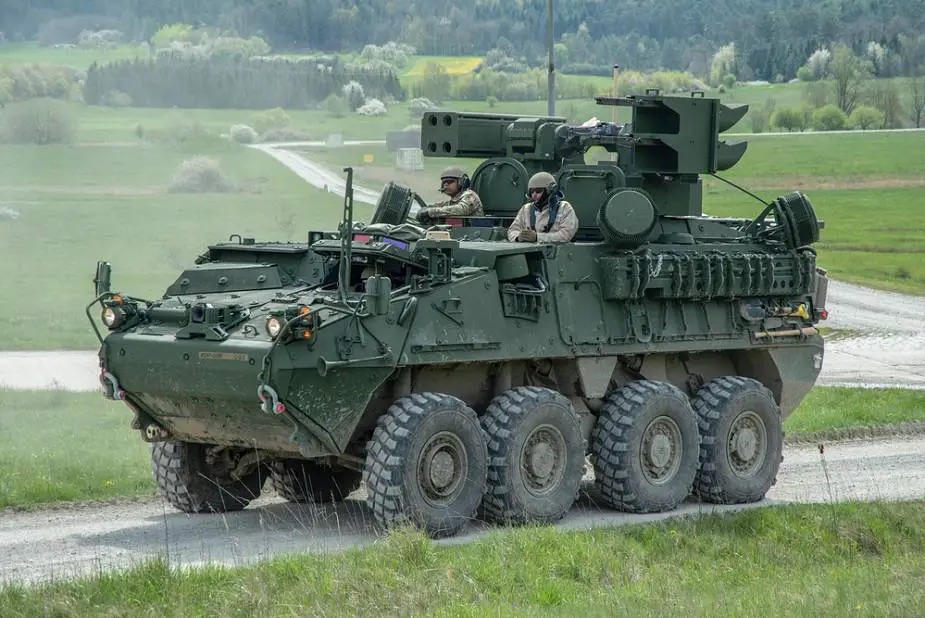
The Stryker M-SHORAD (Maneuver-Short Range Air Defense) system, a mobile and multi-layered air defense platform developed by a consortium including Leonardo DRS, General Dynamics Land Systems, and Raytheon Technologies. Designed to counter a range of aerial threats, including drones, helicopters, and fixed-wing aircraft, the Stryker M-SHORAD integrates kinetic and electronic warfare capabilities.
System Overview
-
Name: Stryker M-SHORAD (Maneuver-Short Range Air Defense)
-
Manufacturer: Leonardo DRS, General Dynamics Land Systems, Raytheon Technologies
-
Country of Origin: United States
-
Type: Mobile, multi-layered air defense system (kinetic and electronic warfare)
-
Intended Use: Military air defense against drones, helicopters, fixed-wing aircraft, and missiles
Technical Specifications
- Detection Capabilities:
AN/APG-74 Active Electronically Scanned Array (AESA) radar
-
Electro-optical/infrared (EO/IR) tracking sensors
-
Integrated with U.S. Army battlefield networks
-
Neutralization Method:
Kinetic:
M230 30mm chain gun with programmable airburst ammunition
-
Stinger (FIM-92) and Hellfire (AGM-114) missiles
-
Electronic Warfare:
Mounted electronic attack system for drone disruption
- Effective Range:
Missiles: Up to 8 km (Stinger), 8+ km (Hellfire)
-
30mm Airburst Rounds: Effective against small UAVs at 3–4 km
-
Electronic Attack: Classified but used for soft-kill capabilities
-
Mobility:
Based on Stryker armored fighting vehicle (8x8)
- Deployment Mode:
Vehicle-mounted, designed for rapid deployment with maneuvering ground forces
Operational Use & Effectiveness
- Known Deployments:
U.S. Army (European Command and Indo-Pacific Command)
-
Initial units deployed in 2021 to counter growing UAV threats
-
Combat/Field Testing History:
Extensively tested in military exercises with NATO allies
-
Proven ability to engage multiple air threats, including drones
-
Effectiveness Against Various Drone Types:
Can neutralize Group 1 to Group 3 drones (small, medium, and larger tactical UAVs)
- Soft-kill electronic attack provides non-destructive countermeasures
Notable Features & Advantages
- Key Strengths:
Multi-layered air defense combining kinetic and electronic counter-drone capabilities
-
Fully mobile, providing on-the-move protection for ground forces
-
Unique Capabilities:
AESA radar enables early drone detection
-
Combines short-range air defense (SHORAD) with anti-drone warfare
-
Adaptability & Scalability:
Designed to integrate with future directed energy weapons
Limitations & Challenges
- Known Weaknesses:
Limited missile capacity (only 4 Hellfire and 4 Stinger missiles per vehicle)
-
30mm cannon less effective against swarm drone attacks
-
Operational Constraints:
Heavier and slower than smaller counter-drone platforms
-
Requires networked battlefield integration for maximum effectiveness
-
Adversary Countermeasures:
Large drone swarms could overwhelm its kinetic defenses
- Some UAVs may use electronic counter-countermeasures (ECCM) to bypass jamming
Future Developments & Upgrades
- Planned Enhancements:
Integration of 50kW laser weapons in future Stryker M-SHORAD variants
-
Expanded electronic warfare capabilities for enhanced drone disruption
-
Integration with Other Systems:
Interoperable with Patriot and other U.S. air defense networks
- Future Deployment Plans:
Additional Stryker M-SHORAD units expected in Europe and the Pacific theater
Image: U.S. DoD
AI-assisted article.