Innhold
- Detailed Technical Analysis of Radar Systems
- US Radar Systems
- Israeli Radar Systems
- European Radar Systems
- Detailed Missile Options Analysis
- US Missile Options
- Israeli Missile Options
- European Missile Options
- Integration Complexity Analysis
- Radar Integration Complexity
- Missile Integration Complexity
- 4. Comprehensive Capability Comparison
- 5. Recommended Upgrade Pathway
- Phase 1: Foundational ATBM Capability (Years 1-2)
- Phase 2: Advanced Interceptor Integration (Years 2-5)
- Phase 3: Ultimate Sensor Network & Full Capability (Years 5+)
- 6. Cost-Benefit Analysis
- 7. Implementation Roadmap
- Phase 1: Foundational Radar Upgrade (Years 1-2)
- Phase 2: Interceptor Integration (Years 2-5)
- Phase 3: Advanced Sensor Network Integration (Years 5+)
- Conclusion
The proliferation of tactical ballistic missiles (TBMs) on the modern battlefield presents a rapidly evolving threat that challenges many of the world’s most established air defense systems. The highly effective Norwegian-American National Advanced Surface-to-Air Missile System (NASAMS), a stalwart in defending against aircraft, drones, and cruise missiles, was not originally conceived to counter the unique high-speed, high-altitude trajectory of ballistic threats. Addressing this capability gap is critical for ensuring the system’s relevance and effectiveness in future conflicts.
This article presents a detailed technical framework for integrating a robust Anti-Tactical Ballistic Missile (ATBM) capability into the NASAMS architecture. It analyzes leading radar and interceptor technologies from American, Israeli, and European defense industries, weighing their performance specifications against the complex realities of system integration. It should be noted that this analysis serves as a strategic thought exercise, exploring potential technological pathways rather than detailing a confirmed program of record. The ultimate goal is to propose a single, coherent implementation roadmap that prioritizes systems with long-term growth potential, thereby transforming NASAMS into a true multi-domain air and missile defense solution.
Detailed Technical Analysis of Radar Systems
US Radar Systems
GhostEye MR
-
Developer: Raytheon (US)
-
Technical Specifications:
360° coverage surveillance and fire control radar
-
Detection range: Up to 40 km for tactical targets
-
Altitude coverage: Up to 20,000 meters (optimally effective at 3,000-12,000m)
-
Technology: Advanced AESA (Active Electronically Scanned Array)
-
Ballistic Missile Detection:
Specifically designed with ballistic missile detection capability
-
Can track and engage multiple targets simultaneously
-
Integration Status: Currently being integrated with NASAMS, tests conducted in early 2024
-
Cost Estimate: $40-60 million per radar system
-
Key Advantage: Purpose-built for NASAMS with minimal integration issues, providing a direct upgrade path.
AN/MPQ-64 Sentinel F1
-
Developer: Raytheon (US)
-
Technical Specifications:
3D X-band pulse-Doppler radar
-
Track range: 120 km (for NASAMS 2)
-
Altitude coverage: Up to 21,000 meters
-
Ballistic Missile Detection:
Limited capability against slower ballistic missiles
-
Not optimized for ballistic trajectory tracking
-
Integration Status: Already integrated (baseline NASAMS radar)
-
Cost Estimate: $20-30 million per radar system
-
Key Limitation: Inadequate for most tactical ballistic missile threats.
Israeli Radar Systems
ELM-2084 MMR
-
Developer: ELTA Systems (Israel Aerospace Industries)
-
Technical Specifications:
S-Band AESA radar
-
Detection range: Up to 470 km for air targets
-
Can track up to 1,100 targets simultaneously
-
Elevation coverage: 0-80°
-
Ballistic Missile Detection:
Proven capability to detect and track tactical ballistic missiles
-
Combat-tested with Iron Dome and David’s Sling
-
Integration Status: Not currently integrated with NASAMS
-
Cost Estimate: $100-125 million per system (based on Czech purchase)
-
Key Advantage: Exceptional range and target handling capacity, representing a top-tier sensor with significant growth potential.
ELM-2311 C-MMR
-
Developer: ELTA Systems (Israel Aerospace Industries)
-
Technical Specifications:
C-Band AESA radar
-
More compact form factor than ELM-2084
-
High mobility and rapid deployment capability
-
Ballistic Missile Detection:
Designed specifically for tactical ballistic missile detection
-
Smaller detection range but optimized for medium-range ballistic threats
-
Integration Status: Not currently integrated with NASAMS
-
Cost Estimate: $60-80 million per system
-
Key Advantage: Better mobility-to-capability ratio than larger systems.
European Radar Systems
Saab Giraffe 4A
-
Developer: Saab (Sweden)
-
Technical Specifications:
G/H-band (4-8 GHz) AESA radar with GaN components
-
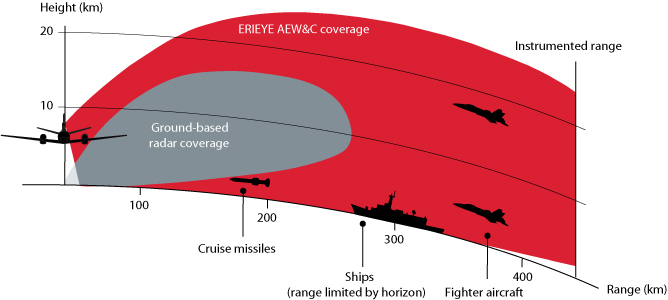
Instrumented range: Up to 400 km
-
Altitude coverage: Up to 20,000 meters at 70° elevation
-
Scanning rate: Up to 8 Hz in GBAD role
-
Ballistic Missile Detection:
More than 100 ballistic missile tracks can be maintained
-
Optimized weapon locating mode for horizon searching
-
Integration Status: Not currently integrated with NASAMS
-
Cost Estimate: $70-90 million per system
-
Key Advantage: Excellent balance of range, altitude and processing capability; high degree of NATO interoperability.
Thales Ground Master 200 MM/A
-
Developer: Thales (France)
-
Technical Specifications:
Medium-range 3D radar
-
Detection range: ~250 km
-
Digital beam forming technology
-
Ballistic Missile Detection:
Moderate capability against slower tactical ballistic missiles
-
Better suited for cruise missiles and aircraft
-
Integration Status: Not currently integrated with NASAMS
-
Cost Estimate: $50-70 million per system
-
Key Advantage: Highly mobile and rapidly deployable.
Detailed Missile Options Analysis
US Missile Options
AMRAAM-ER (Extended Range)
-
Developer: Raytheon (US)
-
Technical Specifications:
Range: Extended from standard AMRAAM (estimated 40-50 km)
-
Speed: Estimated Mach 4+
-
Guidance: Active radar homing
-
Technology: Combines elements of AIM-120 AMRAAM and RIM-162 ESSM
-
ATBM Capability: Limited capability against slower tactical ballistic missiles; not optimized for ballistic threats.
-
Integration Status: Already integrated with NASAMS 3.
-
Cost Estimate: $1.5-2 million per missile
-
Key Advantage: No additional integration costs; uses existing launchers.
PAC-3 MSE (Patriot Advanced Capability-3 Missile Segment Enhancement)
-
Developer: Lockheed Martin (US)
-
Technical Specifications:
Range: Approximately 35 km
-
Altitude: Up to 15 km engagement ceiling
-
Speed: High supersonic/low hypersonic
-
Guidance: Ka-band active radar seeker
-
ATBM Capability: Purpose-built for ballistic missile defense with hit-to-kill technology.
-
Integration Status: Not integrated with NASAMS; would require substantial modifications.
-
Cost Estimate: $5-6 million per missile
-
Key Advantage: Proven ballistic missile interceptor with high success rate.
Israeli Missile Options
Stunner/SkyCeptor
-
Developer: Rafael (Israel) and Raytheon (US)
-
Technical Specifications:
Range: 40-300 km
-
Speed: Up to Mach 7.5
-
Altitude: Effective against threats at various altitudes
-
Guidance: Dual-mode seeker (active radar and IIR)
-
ATBM Capability: Purpose-designed to intercept tactical ballistic missiles, proven with David’s Sling system.
-
Integration Status: Not integrated with NASAMS.
-
Cost Estimate: $2-3 million per missile
-
Key Advantage: Lower cost than comparable systems with dual-seeker technology, representing a high-growth potential interceptor.
Barak ER (Extended Range)
-
Developer: Israel Aerospace Industries
-
Technical Specifications:
Range: Up to 150 km
-
Altitude: Up to 30 km
-
Speed: Hypersonic (with booster)
-
Guidance: Active RF seeker
-
ATBM Capability: Enhanced anti-tactical ballistic missile capabilities, effective against short to medium-range ballistic missiles.
-
Integration Status: Not integrated with NASAMS.
-
Cost Estimate: $3-4 million per missile
-
Key Advantage: Vertical launch capability with 360° coverage similar to NASAMS architecture.
European Missile Options
Aster 30 Block 1NT
-
Developer: MBDA (European consortium)
-
Technical Specifications:
Range: Capable of intercepting targets at ranges over 150 km
-
Altitude: Up to 30 km
-
Speed: Hypersonic
-
Guidance: Active RF seeker with “PIF-PAF” control
-
ATBM Capability: Specifically designed for anti-tactical ballistic missile defense, can counter missiles with ranges up to 1,500 km.
-
Integration Status: Not integrated with NASAMS.
-
Cost Estimate: $4-5 million per missile
-
Key Advantage: Extensive development for ballistic missile defense with proven technology.
Integration Complexity Analysis
Radar Integration Complexity
| Radar System | Integration Complexity | Key Integration Challenges |
|---|---|---|
| GhostEye MR | Low | Already being integrated; software compatibility optimized |
| AN/MPQ-64 Sentinel F1 | None | Already integrated (baseline) |
| ELM-2084 MMR | High | Different data protocols, physical interfaces, command structures |
| ELM-2311 C-MMR | High | Different data protocols, physical interfaces, command structures |
| Saab Giraffe 4A | Medium | NATO standards compatibility but requires interface development |
| Thales Ground Master 200 MM/A | Medium | NATO standards compatibility but requires interface development |
Missile Integration Complexity
| Missile System | Integration Complexity | Key Integration Challenges |
|---|---|---|
| AMRAAM-ER | None | Already integrated with NASAMS 3 |
| PAC-3 MSE | Very High | Different launcher requirements, fire control, guidance data links |
| Stunner/SkyCeptor | High | Different fire control systems, potential new launcher requirements |
| Barak ER | Medium-High | Similar launch architecture but different guidance systems |
| Aster 30 Block 1NT | Very High | Designed for different system architecture, complex integration |
4. Comprehensive Capability Comparison
| System Combination | ATBM Capability | Range | Cost Efficiency | Time to Implementation |
|---|---|---|---|---|
| GhostEye MR + AMRAAM-ER | Moderate | Medium | High | Short (1-2 years) |
| ELM-2084 + Stunner/SkyCeptor | Very High | Long | Medium | Long (5+ years) |
| GhostEye MR + PAC-3 MSE | High | Medium | Low | Medium-Long (3-5 years) |
| ELM-2311 + Barak ER | High | Long | Medium | Long (4-6 years) |
| Thales GM-200 + Aster 30 Block 1NT | High | Long | Low | Very Long (6+ years) |
5. Recommended Upgrade Pathway
To achieve a robust ATBM capability with significant growth potential, a single, phased implementation roadmap is recommended. This approach avoids cycling through interim systems and builds logically towards a final, highly capable architecture. The goal is to evolve NASAMS into a multi-layered defense system by sequentially integrating superior components.
The target end-state is a NASAMS architecture networked with ELM-2084 MMR radars and armed with Stunner/SkyCeptor interceptors. This combination offers the highest performance ceiling and future-proofing. The following phased approach manages risk, cost, and delivers incremental capability.
Phase 1: Foundational ATBM Capability (Years 1-2)
-
Primary Action: Complete the integration of the GhostEye MR radar and optimize the existing AMRAAM-ERmissile.
-
Technical Approach: Finalize the GhostEye MR software integration. Implement fire control software updates to improve ballistic trajectory calculation and optimize AMRAAM-ER engagement envelopes against slower, shorter-range ballistic threats.
-
Expected Capability: Establishes a baseline ATBM capability against rudimentary threats. This low-risk step provides an immediate improvement and a modern AESA radar foundation for future growth.
-
Cost: $40-60M for radar + minimal software development costs.
Phase 2: Advanced Interceptor Integration (Years 2-5)
-
Primary Action: Integrate the Stunner/SkyCeptor missile system into the NASAMS architecture.
-
Technical Approach: This is the most complex phase. It requires developing a compatible fire control solution to process the missile’s dual-mode seeker data. It will likely necessitate modifications to or development of new launcher systems. The US-Israeli partnership between Raytheon and Rafael on this missile provides a strong foundation for this integration.
-
Expected Capability: A transformative leap in kinematic performance. The system gains a purpose-built “hit-to-kill” interceptor capable of defeating a wide range of tactical ballistic missiles at high speed and altitude.
-
Cost: $2-3M per missile + significant non-recurring engineering (NRE) costs for integration.
Phase 3: Ultimate Sensor Network & Full Capability (Years 5+)
-
Primary Action: Integrate the ELM-2084 MMR radar into the networked system.
-
Technical Approach: Develop a data fusion and networking layer that allows the ELM-2084 to act as the primary long-range search and track sensor. The ELM-2084 would provide early warning and high-fidelity track data, cueing engagements for Stunner-equipped NASAMS batteries. Existing GhostEye MR radars would be retained, serving as supplementary or gap-filler sensors, creating a resilient, multi-layered sensor grid.
-
Expected Capability: The full realization of a comprehensive ATBM system. The ELM-2084’s vast detection range and tracking capacity will unlock the maximum engagement envelope of the Stunner/SkyCeptor missile, providing defense in depth against advanced threats.
-
Cost: $100-125M per radar + NRE costs for network integration.
6. Cost-Benefit Analysis
| System Integration Pathway | Upfront Cost | Operational Cost | Capability Gain | Strategic Value |
|---|---|---|---|---|
| Recommended Phased Pathway | Staged over 5+ years | Medium-High | Very High | Excellent. Builds capability progressively, manages risk. |
| GhostEye MR + AMRAAM-ER (Phase 1) | $40-60M + missile stock | Low | Moderate | High (quick, foundational capability) |
| Full ELM-2084 + Stunner (One Step) | $100-125M + $20-30M/battery + high NRE | Medium | Very High | Medium (high initial risk, long delay to any capability) |
| GhostEye + PAC-3 MSE | $40-60M + $50-60M/battery + high NRE | High | High | Medium (high cost, complex integration) |
7. Implementation Roadmap
Phase 1: Foundational Radar Upgrade (Years 1-2)
-
Complete integration and fielding of the GhostEye MR radar with existing NASAMS units.
-
Develop and test fire control software upgrades for ballistic missile tracking and AMRAAM-ER optimization.
-
Validate enhanced capabilities through rigorous simulation and live-fire testing against ballistic target drones.
-
Deploy initial operational capability at critical sites.
Phase 2: Interceptor Integration (Years 2-5)
-
Launch formal program to integrate Stunner/SkyCeptor with the NASAMS Fire Distribution Center (FDC).
-
Design, prototype, and test necessary launcher modifications or replacements.
-
Develop and validate the fire control and guidance uplink architecture for the new interceptor.
-
Begin low-rate initial production of integrated launchers and missile stockpiling.
Phase 3: Advanced Sensor Network Integration (Years 5+)
-
Initiate the integration program for the ELM-2084 MMR radar.
-
Develop the advanced battle management software required for multi-radar data fusion and network-centric operations.
-
Test the full system architecture: ELM-2084 detects and tracks, passes data to the FDC, which cues a Stunner/SkyCeptor launch from a NASAMS battery.
-
Achieve full operational capability with a multi-layered sensor and interceptor network.
Conclusion
To evolve NASAMS into a credible anti-tactical ballistic missile (ATBM) system, a focused, growth-oriented strategy is paramount. A phased approach, beginning with the foundational GhostEye MR radar, then integrating the highly capable Stunner/SkyCeptor interceptor, and culminating with the addition of the long-range ELM-2084 MMR sensor, offers the most logical and risk-managed path forward.
This strategy avoids the inefficiency of cycling through temporary solutions and instead builds layers of capability, ensuring each investment contributes directly to a cohesive and exceptionally potent final system. This transforms NASAMS from its current role into a true multi-domain air defense system, possessing significant growth potential to counter the full spectrum of aerial threats for decades to come