Innhold
- Current NASAMS ballistic missile limitations
- Priority missile integration candidates
- PAC-3 MSE: optimal integration pathway
- SM-3 Block IIA: maximum capability option
- ESSM Block 2 Extended Range: evolutionary approach
- Stunner missile: advanced capability with integration complexity
- Radar integration requirements and candidates
- GhostEye MR: development priority
- LTAMDS technology adaptation
- TPY-4 radar considerations
- Technical integration challenges and solutions
- Launch platform modifications
- Sensor fusion requirements
- Development timeline and feasibility assessment
- Near-term implementation pathway (2025-2027)
- Extended capability development (2027-2030)
- Strategic implications and recommendations
PAC-3 MSE emerges as the most viable near-term ballistic missile defense integration candidate for NASAMS, leveraging proven hit-to-kill technology with minimal architectural modifications, while GhostEye MR radar provides the essential sensor foundation already under development. This combination could deliver tactical ballistic missile defense capability by 2027-2030 within existing NASAMS open architecture parameters.
Current NASAMS ballistic missile limitations
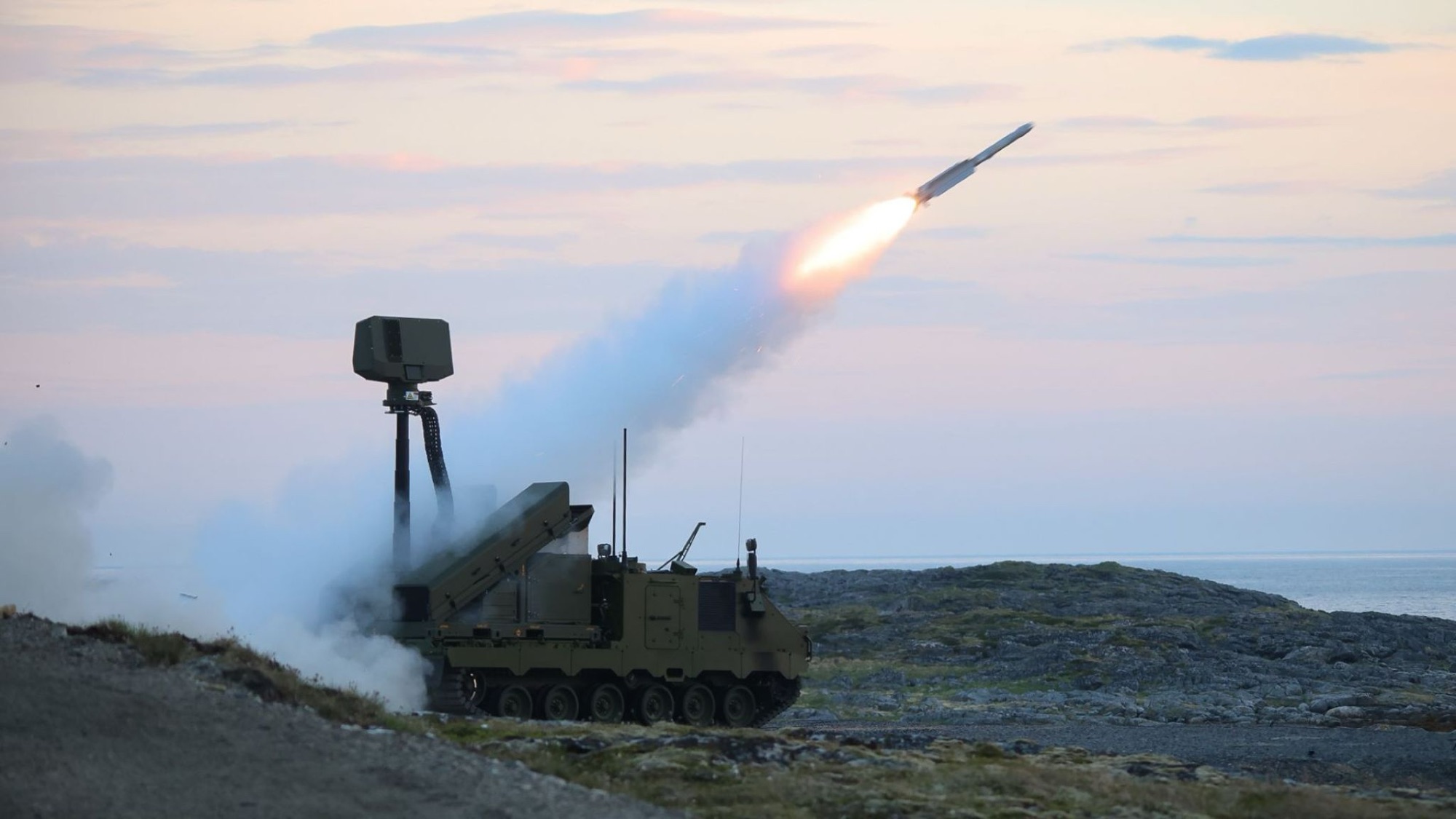
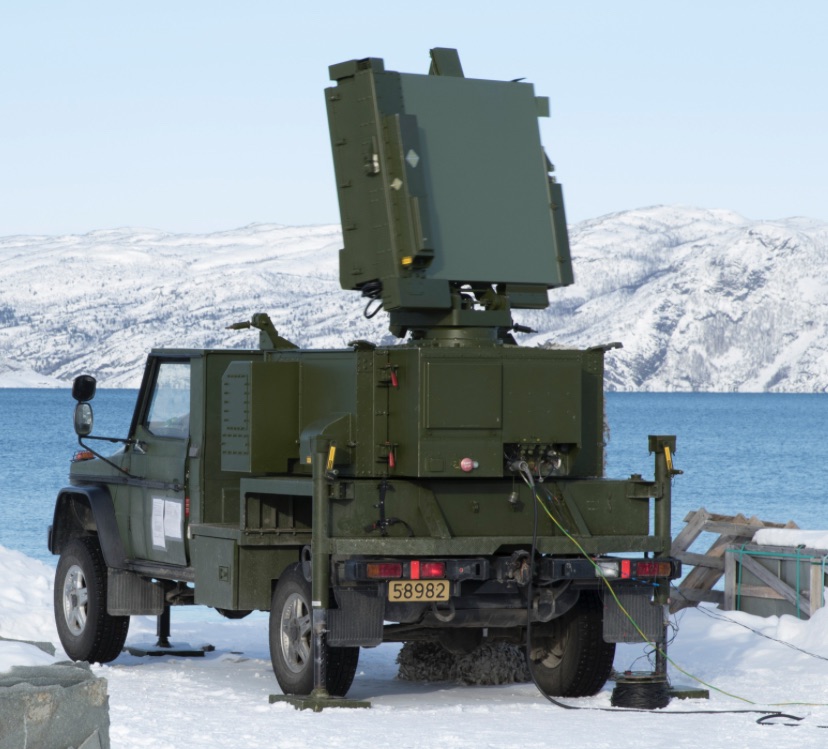
NASAMS currently lacks anti-tactical ballistic missile capability due to fundamental limitations in both sensor performance and interceptor characteristics. The AN/MPQ-64F1 Sentinel radar operates in X-band with insufficient detection range and tracking precision for ballistic missile trajectories, providing only 80km maximum detection range against conventional air-breathing targets. AMRAAM and AMRAAM-ER missiles, while effective against cruise missiles and aircraft, lack the kinematic performance for ballistic missile intercept, with terminal velocities insufficient for exo-atmospheric engagement and guidance systems optimized for air-breathing rather than ballistic targets.
Recent NASAMS upgrades demonstrate limited ballistic missile potential: integration of AMRAAM-ER extends range to 50km with 70% altitude increase, while GhostEye MR radar development specifically addresses ballistic missile detection requirements. However, fundamental gaps remain in intercept geometry, kill vehicle design, and sensor precision required for reliable ballistic missile engagement.
Priority missile integration candidates
PAC-3 MSE: optimal integration pathway
PAC-3 Missile Segment Enhancement represents the most technically viable ballistic missile defense option for NASAMS integration. The system provides proven hit-to-kill capability with 94% effectiveness against advanced maneuvering targets in Ukraine, demonstrating operational credibility against Russian Iskander and Iranian ballistic missiles.
Technical specifications align favorably with NASAMS architecture: 5.2m length and 254mm diameter enable integration within standard NASAMS canister launchers, while dual-pulse solid rocket motor provides Mach 5+ terminal velocity sufficient for tactical ballistic missile engagement. The advanced Ka-band active radar seeker combined with infrared imaging provides dual-mode terminal guidance optimized for ballistic targets, surpassing AMRAAM’s single-mode active radar approach.
Integration advantages include NATO standardization through existing Patriot logistics networks and proven interoperability with Link 16 tactical data systems. PAC-3 MSE production rates of 650+ missiles annually provide adequate supply chain capacity, while unit costs of $4-5 million compare favorably to SM-3 alternatives exceeding $10 million per interceptor.
Critical limitation: PAC-3 MSE effective engagement envelope extends only to 35km range and 20km altitude, constraining defense coverage compared to extended-range alternatives. However, this performance envelope adequately addresses tactical ballistic missiles (Iskander, ATACMS-class threats) representing primary European security concerns.
SM-3 Block IIA: maximum capability option
Standard Missile-3 Block IIA provides superior ballistic missile defense capability with 2,500km range and exo-atmospheric intercept potential, including demonstrated ICBM engagement capability. The 21-inch diameter kinetic kill vehicle delivers exceptional terminal performance against sophisticated targets with advanced discrimination algorithms.
Integration challenges prove substantial: SM-3 requires Mark 41 VLS-class launchers incompatible with current NASAMS canister architecture, necessitating fundamental system redesign. Unit costs exceeding $12 million per interceptor create prohibitive economic barriers, while limited production capacity of 125-300 interceptors annually constrains availability for widespread deployment.
Strategic assessment indicates SM-3 integration would fundamentally alter NASAMS architecture toward naval-style area defense rather than distributed land-based operations. While technically feasible through Mark 41 launcher integration, such modifications would compromise NASAMS’ core advantages in mobility and cost-effectiveness.
ESSM Block 2 Extended Range: evolutionary approach
Evolved Sea Sparrow Missile Block 2 offers potential middle-ground solution through booster integration extending range to 130km. The active radar seeker adapted from AMRAAM provides compatibility with existing NASAMS fire control systems, while quad-pack capability within strike-length launchers enables high magazine capacity.
Ballistic missile capability remains limited: ESSM design optimization for air-breathing targets constrains performance against high-velocity ballistic trajectories. Development of ESSM-ER variant would require substantial modification including enhanced kinematic performance and improved terminal guidance, representing significant development investment comparable to new missile procurement.
Assessment: ESSM Block 2 provides evolutionary enhancement of conventional air defense capability but insufficient transformation for reliable ballistic missile defense. Integration complexity and development costs exceed advantages over purpose-built ballistic missile interceptors.
Stunner missile: advanced capability with integration complexity
David’s Sling Stunner missile demonstrates exceptional ballistic missile performance with Mach 7.5 terminal velocity and proven effectiveness against Iskander-class targets. The hit-to-kill design with dual EO/IR and radar seekers provides robust terminal guidance, while three-pulse solid propellant motor enables optimal intercept geometry.
Integration challenges center on industrial and political considerations: Rafael-Raytheon partnership complicates integration with Kongsberg-led NASAMS development, while Israeli export restrictions may constrain technology transfer. Technical integration requires adaptation of Stunner’s vertical launch architecture to NASAMS canister systems, potentially necessitating missile modifications affecting performance.
Strategic assessment indicates Stunner integration viable for specialized applications but complex for standard NASAMS deployment. Exceptional capability may justify integration costs for high-threat environments, but broader adoption faces industrial and political barriers.
Radar integration requirements and candidates
GhostEye MR: development priority
GhostEye Medium Range radar emerges as the essential sensor foundation for NASAMS ballistic missile capability. The S-band AESA design leverages LTAMDS technology baseline with gallium nitride components providing enhanced detection range and tracking precision required for ballistic missile engagement.
Current development status indicates operational deployment by 2025-2027: Norway’s co-development partnership with Raytheon ensures integration compatibility with NASAMS architecture, while 360-degree coverage and rapid deployment capability maintain system mobility advantages. Technical specifications remain classified, but performance expectations include 120+ km detection range against ballistic targets with precision tracking throughout engagement envelope.
Integration with PAC-3 MSE creates optimal near-term ballistic missile defense configuration: GhostEye provides early warning and track initiation, while PAC-3 MSE delivers terminal intercept capability. This combination leverages proven technologies within NASAMS open architecture framework.
LTAMDS technology adaptation
Lower Tier Air and Missile Defense Sensor technology provides advanced capability pathway for extended-range ballistic missile defense. The three-array AESA configuration with enhanced processing power delivers exceptional performance against hypersonic and advanced ballistic threats, representing generational advancement over current radar technologies.
Integration complexity increases substantially: LTAMDS physical configuration requires significant modifications for NASAMS mobile operations, while power requirements exceed standard NASAMS generator capacity. Development of NASAMS-optimized LTAMDS variant would provide exceptional capability but at substantial cost and complexity.
Assessment indicates LTAMDS technology suitable for fixed-site NASAMS installations defending critical infrastructure, but excessive for mobile battlefield air defense applications. Selective deployment for high-value targets may justify integration costs.
TPY-4 radar considerations
AN/TPY-4 radar provides proven long-range surveillance capability with ballistic missile tracking performance, offering L-band AESA technology with 500+ km detection range. The system demonstrates operational effectiveness through USAF 3DELRR program with established production and support infrastructure.
Integration challenges include size and power requirements incompatible with NASAMS mobile architecture. TPY-4 configuration optimized for strategic surveillance rather than tactical fire control, requiring additional sensors for terminal guidance. Assessment indicates TPY-4 suitable for sector-level early warning within integrated air defense networks but inappropriate for direct NASAMS integration.
Technical integration challenges and solutions
Launch platform modifications
PAC-3 MSE integration requires minimal NASAMS launcher modifications: existing canister launcher architecture accommodates 254mm diameter missiles with length extensions, while electrical interfaces adapt readily to PAC-3 MSE requirements. Vertical launch capability maintains 360-degree engagement envelope critical for ballistic missile defense.
Fire Distribution Center enhancements focus on ballistic missile engagement algorithms and extended-range coordination: software upgrades enable automated threat classification and interceptor selection, while communications enhancements support coordination with strategic warning systems. Processing capability expansion handles increased data rates from advanced radar sensors.
Sensor fusion requirements
Multi-sensor integration proves essential for reliable ballistic missile engagement: space-based infrared early warning, ground-based surveillance radars, and terminal fire control sensors require seamless data fusion. NASAMS open architecture facilitates integration through NATO-standard tactical data links, enabling automated track hand-off and collaborative engagement.
Technical challenge centers on track quality and latency management: ballistic missile engagement timelines measured in seconds demand hard real-time performance across sensor networks. Enhanced processing capability and redundant communications ensure reliable performance in contested electromagnetic environments.
Development timeline and feasibility assessment
Near-term implementation pathway (2025-2027)
Phase 1 development focuses on GhostEye MR radar integration with existing NASAMS architecture: sensor installation and software integration enable enhanced aircraft and cruise missile engagement while establishing technical foundation for ballistic missile capability. Testing and validation demonstrate system performance against representative threats.
Phase 2 introduces PAC-3 MSE integration with GhostEye MR sensor suite: launcher modifications and fire control software updates enable tactical ballistic missile engagement capability. Integrated testing validates end-to-end performance against Iskander-class targets.
Extended capability development (2027-2030)
Advanced integration incorporates extended-range sensors and enhanced interceptors: TPY-4 or LTAMDS technology adaptation extends detection range, while next-generation interceptors address emerging hypersonic threats. Full spectrum ballistic missile defense capability spans tactical through intermediate-range threats.
International cooperation accelerates development and reduces costs: NATO standardization efforts and allied procurement programs share development expenses while ensuring interoperability. Norwegian leadership in NASAMS ballistic missile defense creates export opportunities and industrial advantages.
Strategic implications and recommendations
PAC-3 MSE integration with GhostEye MR radar represents optimal balance of capability, cost, and integration complexity for NASAMS ballistic missile defense evolution. This configuration addresses primary tactical ballistic missile threats while preserving NASAMS’ essential characteristics of mobility, cost-effectiveness, and NATO interoperability.
Development priority should focus on near-term implementation leveraging proven technologies and existing industrial partnerships. Norwegian co-development of GhostEye MR ensures integration compatibility, while PAC-3 MSE production capacity supports timely deployment schedules.
Strategic assessment indicates NASAMS ballistic missile defense capability essential for Norwegian High North operations and broader NATO deterrence architecture. Integration timeline aligns with threat development projections while maintaining technological leadership in network-centric air defense systems.
The transformation from current NASAMS air defense capability to comprehensive anti-tactical ballistic missile systems represents achievable evolution rather than revolutionary change, building upon established technological foundations while addressing critical capability gaps in European defense architecture.