Innhold
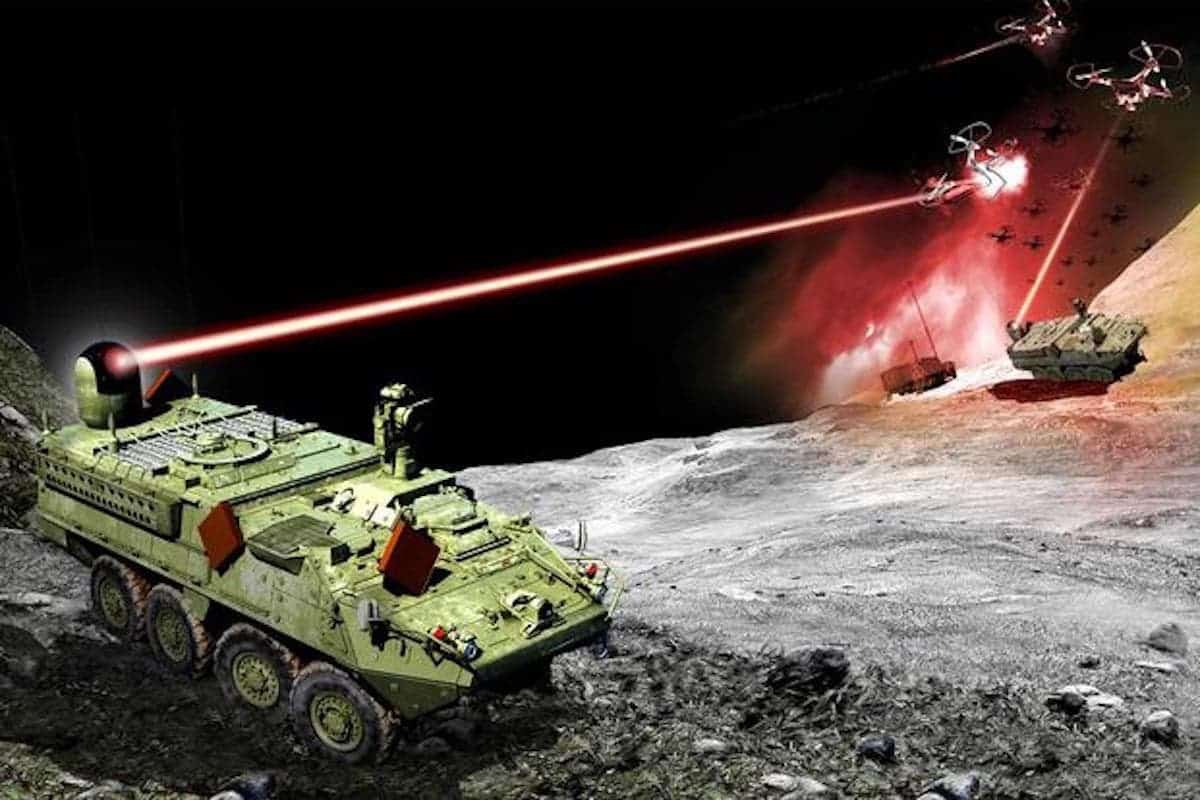
The C-UAS HELWS (High Energy Laser Weapon System), a cutting-edge directed energy weapon developed by Raytheon Technologies. Utilizing a high-energy laser, HELWS offers a precise and low-cost-per-shot solution for neutralizing unmanned aerial vehicles and other airborne threats.
System Overview
-
Name: C-UAS HELWS (High Energy Laser Weapon System)
-
Manufacturer: Raytheon Technologies
-
Country of Origin: United States
-
Type: Directed energy weapon (high-energy laser)
-
Intended Use: Military and homeland security defense against UAVs, rockets, mortars, and other airborne threats
Technical Specifications
- Detection Capabilities:
Integrated radar and electro-optical/infrared (EO/IR) sensors
-
AI-driven tracking and targeting system
-
Neutralization Method:
High-energy laser (50kW-class) burns drones mid-flight
-
Silent and precise destruction with no collateral damage
-
Effective Range:
Estimated to be several kilometers
- Mobility:
Modular design, can be mounted on military vehicles, trailers, or fixed installations
- Deployment Mode:
Rapid engagement, can fire multiple shots without reloading
Operational Use & Effectiveness
- Known Deployments:
U.S. Air Force, U.S. Army, and international partners
-
Used for base protection and battlefield air defense
-
Combat/Field Testing History:
Deployed in **U.S. Central Command (USCENTCOM) and Indo-Pacific Command (INDOPACOM)**regions
-
Successfully destroyed multiple UAVs in testing and real-world scenarios
-
Effectiveness Against Various Drone Types:
Group 1 to Group 3 UAVs (small, medium, and larger tactical drones)
- Can engage multiple targets continuously without ammunition constraints
Notable Features & Advantages
- Key Strengths:
Infinite “ammunition” (limited only by power supply)
-
No collateral damage, as it precisely destroys UAVs mid-air
-
Unique Capabilities:
Silent operation, unlike kinetic or explosive-based systems
-
Instantaneous engagement, neutralizing threats within seconds
-
Adaptability & Scalability:
Can be integrated into existing air defense networks
Limitations & Challenges
- Known Weaknesses:
Weather-dependent (rain, fog, and dust reduce laser effectiveness)
-
Power-intensive, requiring a stable power source
-
Operational Constraints:
Limited range compared to kinetic missiles
-
May struggle against swarm attacks due to single-target engagement
-
Adversary Countermeasures:
Drones with reflective coatings may reduce laser effectiveness
- High-speed UAVs require advanced tracking systems for precision targeting
Future Developments & Upgrades
- Planned Enhancements:
Higher-powered lasers (100kW+) for extended range and faster kills
-
Integration with AI-powered targeting for swarm drone defense
-
Integration with Other Systems:
Can work alongside kinetic and RF jamming countermeasures
- Future Deployment Plans:
Further testing in combat zones, with expanded military adoption
Image: U.S. Army
AI-assisted article.